How to Throw a Quiz Night
The complete host’s guide to quiz night: rounds, scoring, teams, tiebreakers, and hosting tips that keep everyone laughing.
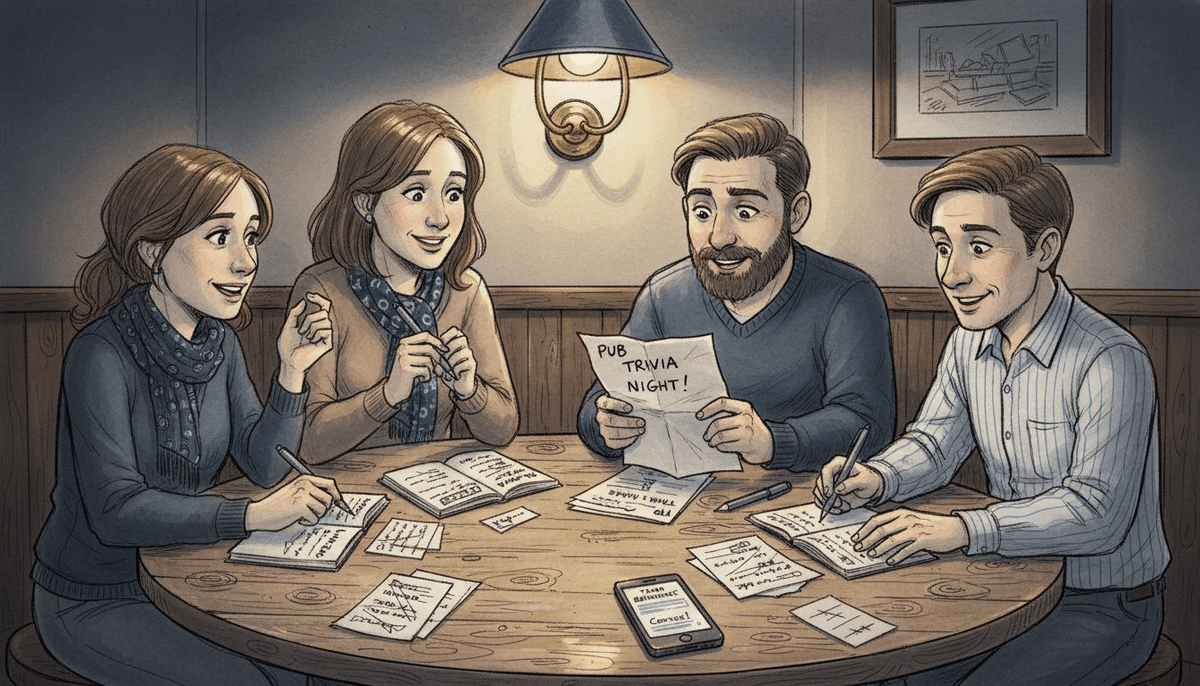
Quiz nights are the perfect party: competitive enough to be thrilling, relaxed enough for snacks, and guaranteed to surface someone’s shockingly specific knowledge of 90s cartoons.
Whether it’s your living room or the local café, hosting a great quiz night comes down to structure, variety, and energy. Here’s the full playbook.
Plan your rounds
Aim for 5–6 rounds of 8–10 questions each, mixing formats: general knowledge, music clips, picture rounds, “name that movie quote,” and a wild-card round (smells? textures? go wild). Variety keeps every team in the game — nobody dominates everything.
Ramp difficulty gently: start easy so teams feel smart, peak in the middle, and end with a fun finale round. Include one interactive round — like a taste test or a drawing challenge — for energy.
Teams, scoring, and tiebreakers
Teams of 3–6 work best; cap team sizes so one trivia titan can’t carry a table of ten. Score 1 point per question, with a double-points “joker” round where each team bets on their strongest category.
Always prepare a tiebreaker: “In what year was…?” with closest-guess-wins. And announce scoring clearly between rounds — nothing kills vibes like disputed math.
Host like a pro
Your job is energy, not just questions. Read with enthusiasm, ban phones (or embrace a phone round), keep rounds moving, and celebrate great wrong answers — they’re often funnier than the right ones.
Prizes don’t need to be fancy: candy, silly trophies, or the honor of choosing next month’s theme. End with a group photo of the winning team holding something ridiculous.